
The Pivaut ice house
The largest witness of the ice trade
From the 17th century to the end of the 19th, the Sainte-Baume supplied Marseille and Toulon with ice. The principle was simple: in winter, shallow basins were flooded and the frost turned them into sheets of ice; these were broken up, piled into huge covered stone wells, the ice houses, and the ice was carried down to the towns by night, by cart. Several dozen ice houses survive in the massif.
A sandstone tower
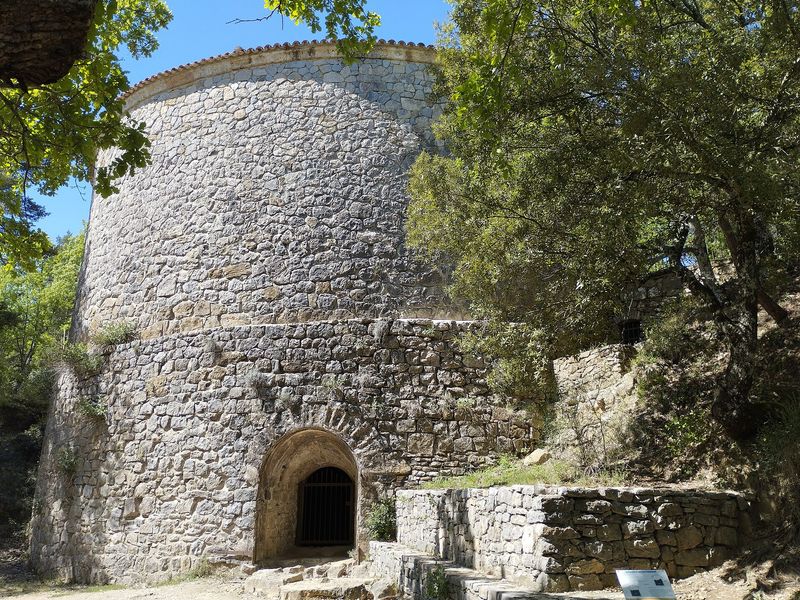
The Pivaut ice house, also called the Gaudin ice house, is the most imposing. Built in 1880 in sandstone, it is 23 metres high and 17.6 metres in diameter and could hold 3,100 cubic metres of ice. Three adjoining freezing basins, with a total surface of 5,000 square metres and filled with 15 centimetres of water, fed it; two to four frosts were enough to fill it. A slight slope and oak trees planted on purpose limited the sunshine.
Arriving too late in the face of artificial ice, it was used for only a few years. It has been listed as a historic monument since 1993.
Visiting
The ice house has been fully restored by the Var department. A themed trail leads to it from the D95 road, with panels on the fauna, the flora, the history of the site and the working of ice houses. The Pivaut ice house and Gaudin loop, from Mazaugues, passes it halfway; from Nans-les-Pins, the Escaillon ice road follows one of the routes the carters used.
See also
- Type
- Ice house
- Period
- Construite en 1880
- Protection
- Inscrite au titre des monuments historiques en 1993
- Reach it on foot
- The Pivaut ice house and the Gaudin