Our pick
- Village
Old Nans
Before it moved down to the plain, Nans was a fortified hilltop village. Its ramparts and 12th-century castle are still legible in the garrigue.
Nans-les-Pins
Old Nans, the chapels and oratories, the grotto of Mary Magdalene and the memory of the massif.
Before it moved down to the plain, Nans was a fortified hilltop village. Its ramparts and 12th-century castle are still legible in the garrigue.
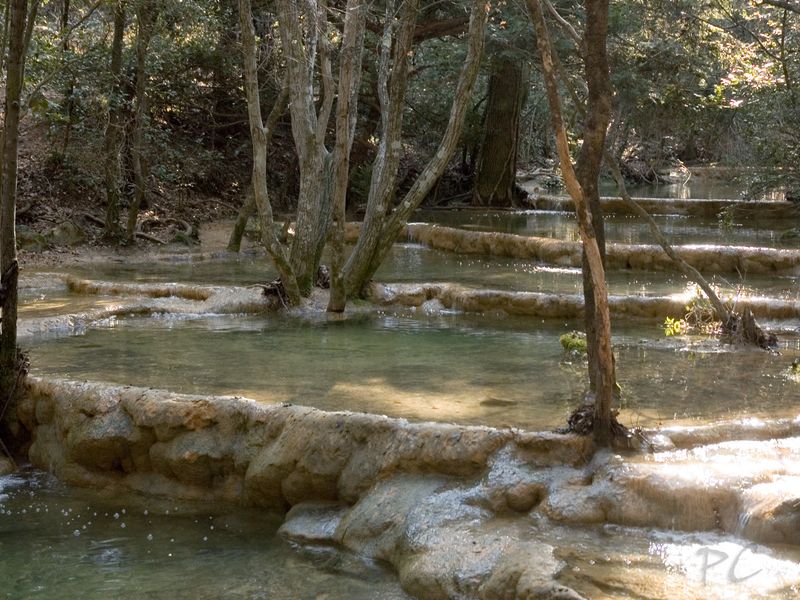
At the northern foot of the Sainte-Baume, the Huveaune rises in the Castelette valley and builds a run of clear travertine pools on its first metres.
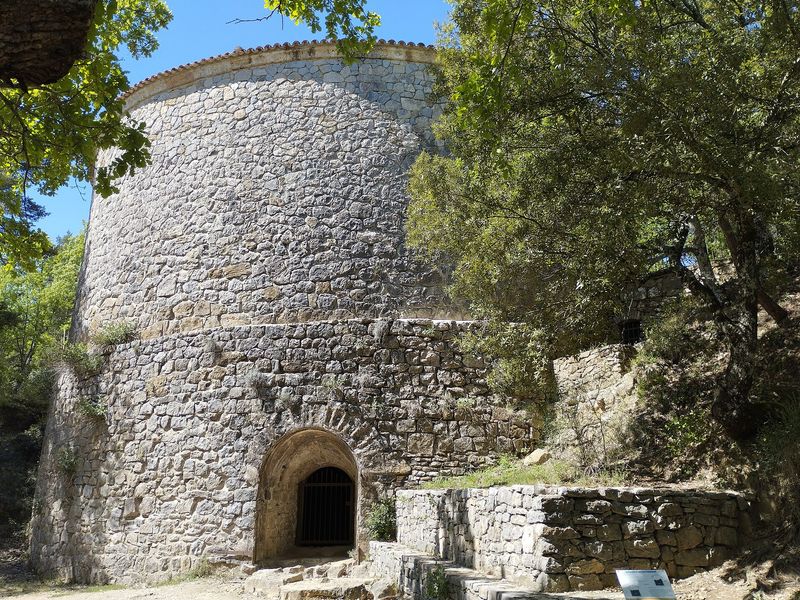
At Mazaugues, a 23-metre sandstone tower that held 3,100 cubic metres of ice. Built in 1880 and restored, it tells the story of a forgotten trade.
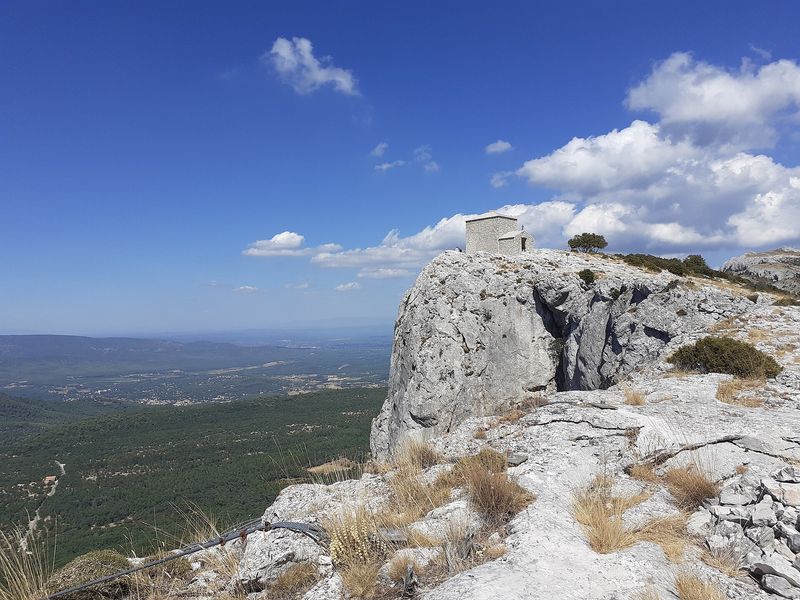
High on the ridge, the Saint-Pilon chapel marks the summit of the pilgrimage and one of the widest views in Provence.
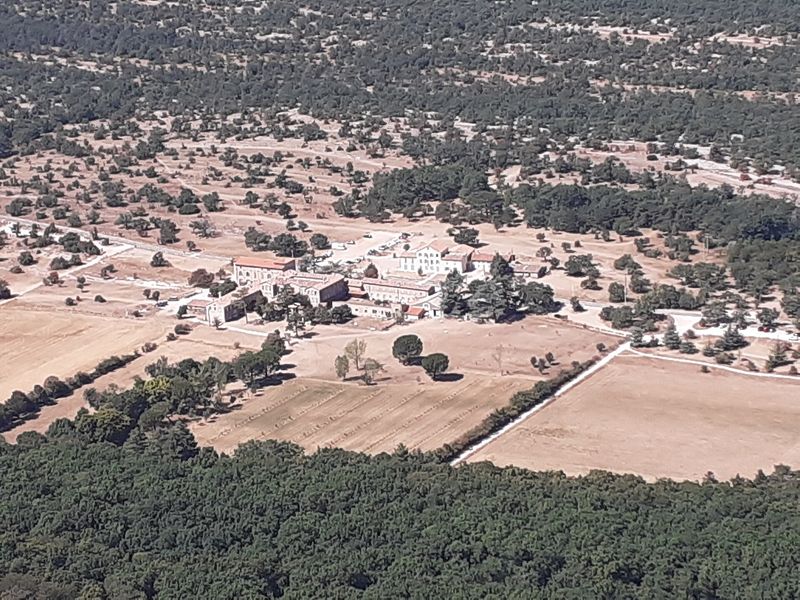
On the shaded slope, a mountain beech forest survives a few kilometres from the Mediterranean, protected for fifteen centuries.
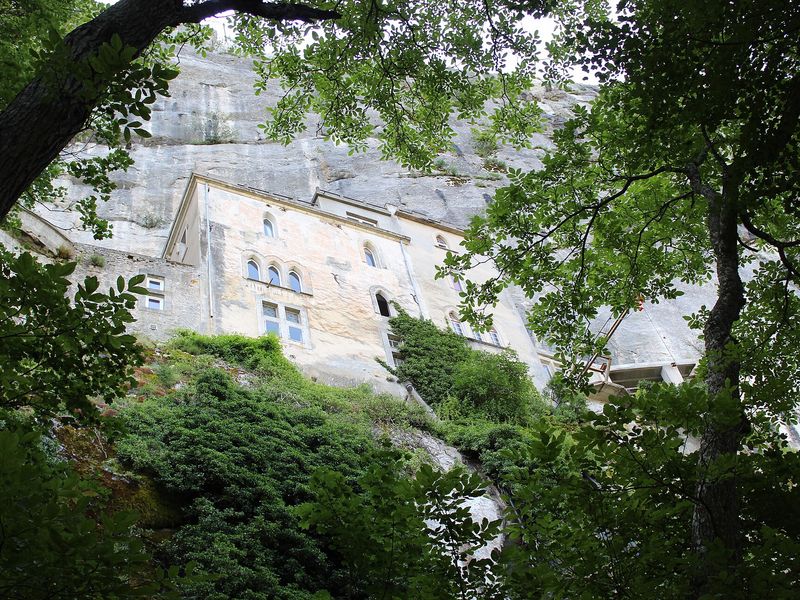
Cut into the cliff, the grotto where tradition places Mary Magdalene's last thirty years, guarded by the Dominicans since 1295.
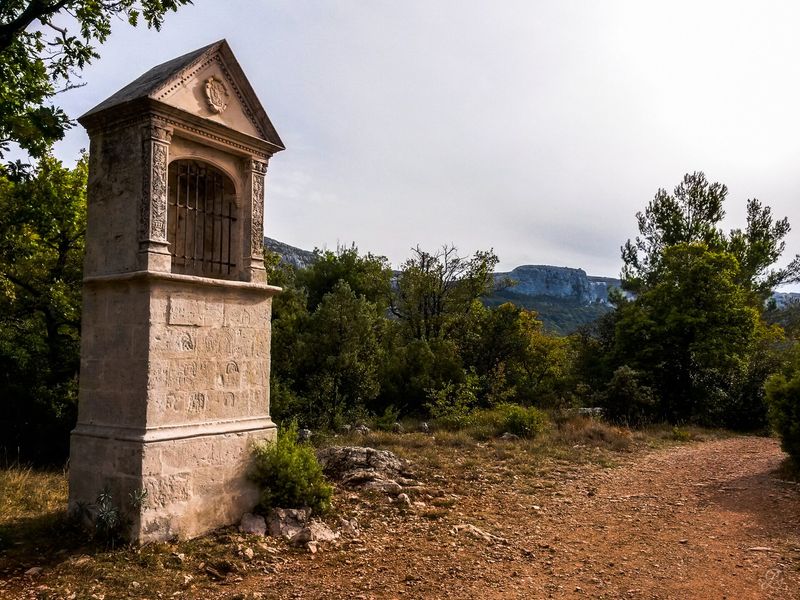
Beside the road to the Sainte-Baume, a stone oratory of 1516 marking the old pilgrims' way. A listed historic monument since 1938.
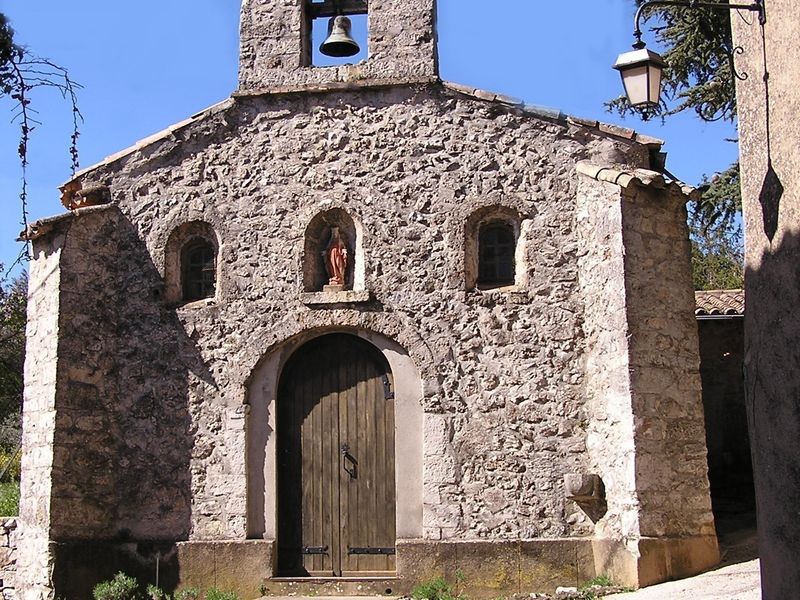
Built in 1623 for the White Penitents, it closes the Grand-Rue and starts the paths up to the Huveaune and the mountain.
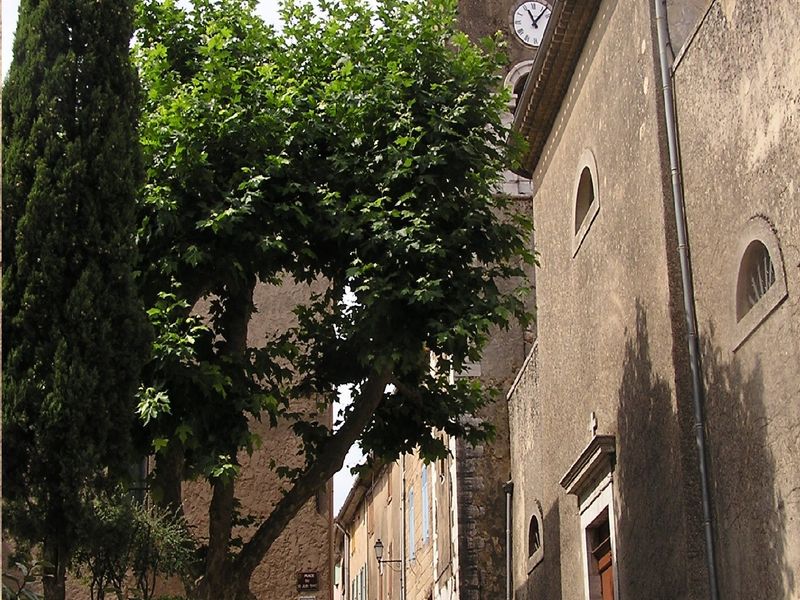
The parish church holds a bronze bell cast in 1670 and listed as a historic monument. Its wrought-iron belfry overlooks the Grand-Rue.
On the Sainte-Croix hill, Iron Age ramparts mark a fortified settlement lived in for two centuries, around 200 BC.
From Saint-Maximin to the grotto of Mary Magdalene by way of Nans-les-Pins, the route kings, popes and pilgrims followed for centuries.
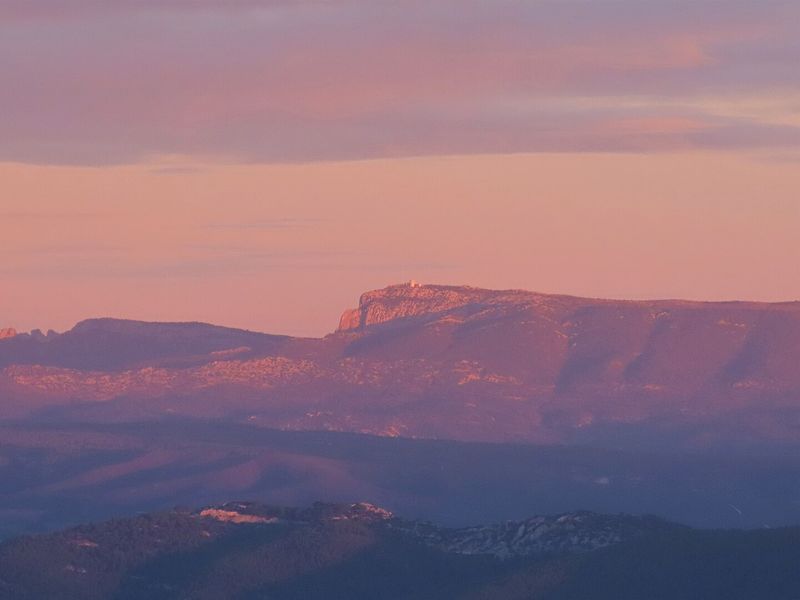
At the western end of the ridge, the pic de Bertagne reaches 1,042 metres, the highest point of the Bouches-du-Rhône, known by its radar station.