
The Huveaune springs
The Castelette valley and its travertine pools
The Huveaune is a coastal river 48.4 kilometres long. It rises in the commune of Nans-les-Pins, in the cirque of the Castelette valley on the north slope of the Sainte-Baume, and reaches the Mediterranean at the Prado beaches in Marseille after crossing Saint-Zacharie, Auriol, Roquevaire, Aubagne and La Penne-sur-Huveaune.
The pools
Over its first kilometres, the lime-laden water deposits travertine and builds natural dams: the pools, or "gours", a string of clear basins separated by small waterfalls, under oaks and beeches. The whole took several thousand years to form and is damaged in a few steps: the bed is fragile even when dry, and trampling the travertine destroys it for good. Swimming, mountain biking and dogs are forbidden, even on a lead.
The flow varies greatly with the seasons. The pools are often dry in summer and fill again after the autumn and spring rains, the best times to discover them. In flood the river can become powerful: 56 cubic metres per second were measured on 14 December 2008.
The Castelette cave
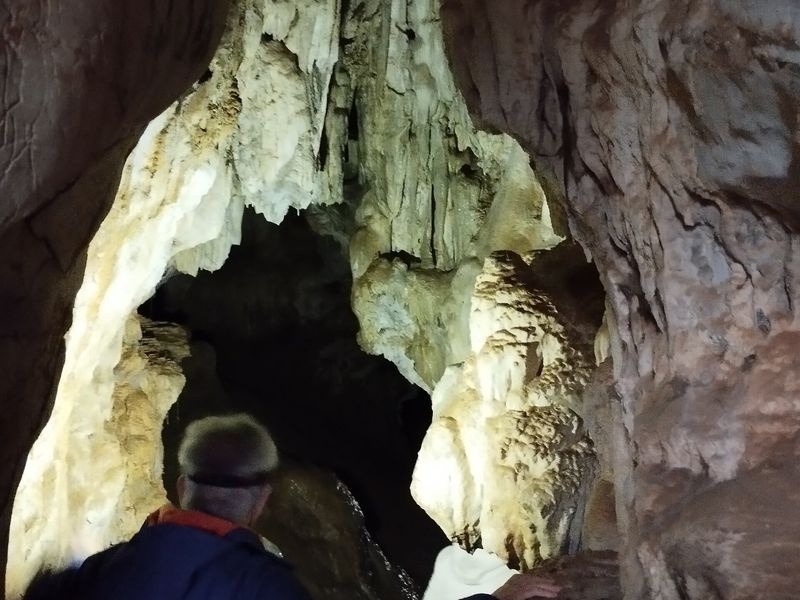
A little upstream of the pools, the Castelette cave opens in the hillside at about 590 metres; this is where the birth of the river is placed, and its resurgence can be seen from the footbridge on the path. The valley is part of the managed biological reserve of the Sainte-Baume state forest, which protects this environment and its species.
Getting there
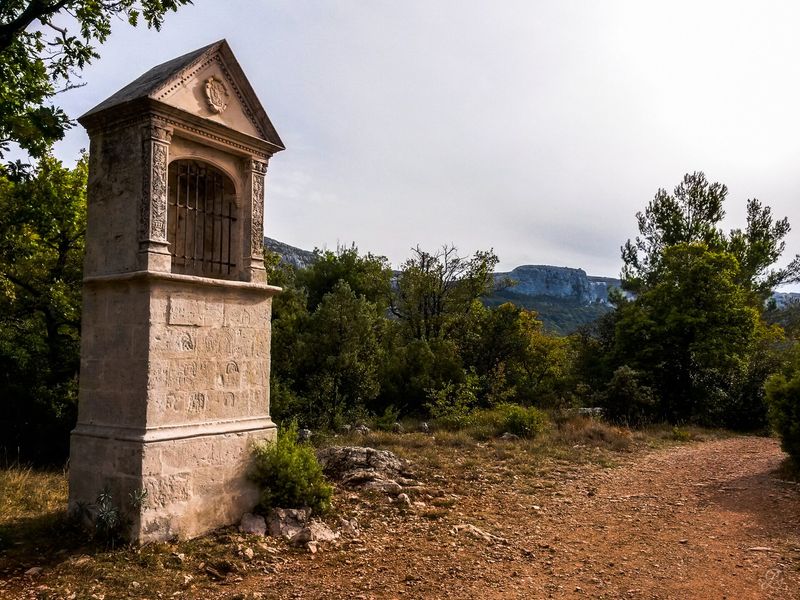
The Huveaune springs loop starts from the centre of Nans-les-Pins and reaches the site in an hour and a quarter of walking, by a signposted path and then along the pools from above, with interpretation panels. In summer, access depends on the day's prefectoral order.
See also
- Type
- Natural site
- Protection
- Réserve biologique dirigée du vallon de Castelette
- Reach it on foot
- The great Huveaune loop Huveaune springs loop From the Huveaune to Mantelette